Introduction about Methatreams
Methatreams are poised to be the groundbreaking force that merges human cognition, advanced artificial intelligence, and the vast potential of the metaverse.
This concept represents the next evolution of interactive, creative, and collaborative technology, unlocking untapped human potential by facilitating an entirely new way to think, create, and connect. By creating a bridge between the mind and the digital world, Methatreams offer the possibility of reshaping industries and revolutionizing human interaction on a scale previously unimaginable.
The secrets behind Methatreams lie in the interplay of real-time neural integration, immersive digital environments, and collective intelligence, all operating in seamless synchrony.
Read This Article: Katz Martian Greece: A Unique Cultural Icon Explained
The Technological Foundations of Methatreams
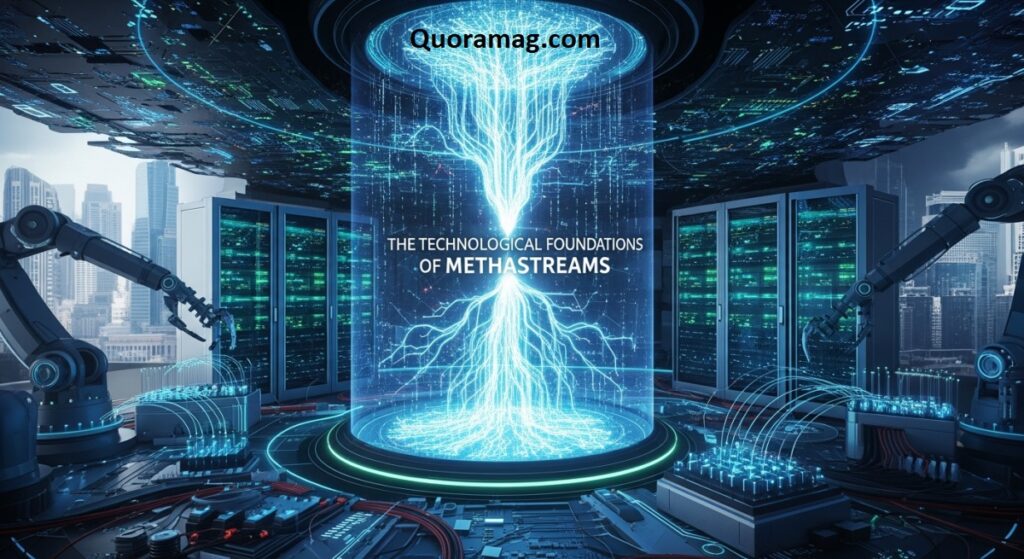
At the heart of Methatreams lies an intricate fusion of cutting-edge technologies, including quantum computing, neural interfaces, and AI-driven metaverses. By utilizing these technologies, Methatreams allow individuals to project their thoughts and ideas directly into an immersive, interactive digital landscape.
This process is facilitated by sophisticated neural interfaces that read and interpret brain signals, translating abstract thoughts into tangible, 3D models that can be manipulated, shared, and developed in real-time.
One of the most fascinating aspects of Methatreams is the use of quantum computing, which enables vast amounts of data to be processed at unprecedented speeds, allowing for a level of responsiveness and interactivity that surpasses anything current digital platforms can offer.
The combination of quantum speed with neural interaction opens up the possibility for individuals to not only create but experience and modify ideas instantly, all within a shared, collaborative digital space.
The metaverse plays a crucial role in shaping these interactions, providing a visual and spatial framework for Methatreams. By stepping into these metaversal environments, users can immerse themselves in a world where their thoughts become tangible entities, constantly evolving and adapting as they interact with the environment.
These virtual spaces are not just passive settings but active participants in the creative process, responding to cognitive input in real-time and altering the landscape accordingly.
Applications across Industries
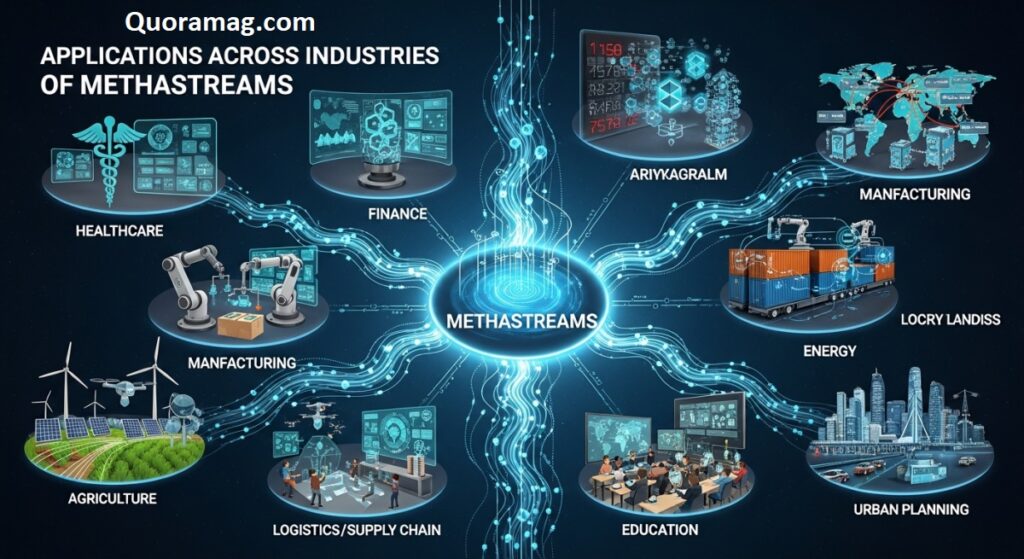
Methatreams have the potential to dramatically impact a wide array of industries, creating new possibilities for collaboration, creativity, and innovation. Education, for instance, could be transformed by Methatreams, with students no longer confined to textbooks and abstract concepts. Instead, they could interact with history, science, and mathematics in dynamic, immersive ways.
Imagine a student being able to walk through the streets of ancient Rome, witness a historical event unfold, or manipulate complex molecular structures in 3D—all within the digital environment powered by Methatreams. This hands-on, experiential learning could lead to deeper understanding and more engaging educational experiences.
In the healthcare sector, Methatreams could revolutionize medical training and patient care. Doctors and surgeons could practice procedures in virtual environments before performing them on real patients, improving precision and minimizing risk. Collaborative medical teams could gather in shared digital spaces to brainstorm and model the best treatment plans, instantly accessing the vast knowledge stored within AI-powered neural networks.
The ability to simulate complex surgeries, analyze patient data in real-time, and visualize treatment outcomes would not only enhance patient care but could also dramatically reduce healthcare costs by minimizing errors and improving efficiency.
The entertainment industry stands to gain immensely from Methatreams, with creators able to develop interactive and immersive experiences that blur the line between the creator and the audience. Filmmakers, game designers, and artists could create in virtual spaces where their ideas are constantly evolving, influenced by both their own thoughts and the feedback from collaborators or even the audience.
Rather than simply watching a film or playing a game, users could immerse themselves in the narrative, changing the story’s direction, environment, and characters as the plot unfolds. This immersive creativity could lead to new forms of storytelling, where the boundaries between reality and fiction become increasingly fluid.
Urban planning and architecture would also experience a paradigm shift. City designers and architects could work with their clients in virtual environments to visualize buildings, neighborhoods, and urban landscapes before a single brick is laid.
These virtual models could incorporate real-time data, such as weather patterns, environmental impact, and population density, allowing planners to simulate potential outcomes and adjust designs accordingly. This level of foresight would not only improve the quality of urban development but also foster greater collaboration and consensus-building among various stakeholders.
The Ethical Challenges and Implications
While the potential benefits of Methatreams are vast, their development also raises several ethical concerns that must be addressed. One of the most pressing issues is privacy and data security. As Methatreams involve direct brain-computer interfacing, the collection and processing of neural data could pose significant risks if not adequately protected. Ensuring that users’ thoughts, emotions, and personal data are secure from unauthorized access or misuse is paramount in the responsible development of this technology.
Another ethical consideration is the potential for digital inequality. If access to Methatreams is restricted to certain socioeconomic groups or geographical regions, it could exacerbate existing disparities in education, healthcare, and creative opportunities.
To prevent such outcomes, Methatreams must be designed with inclusivity in mind, ensuring that the technology is accessible to all, regardless of income or location.
Finally, there is the question of human autonomy. As AI becomes increasingly integrated into the Methatreams environment, there is the possibility that individuals could become overly reliant on AI to shape their ideas and decisions.
The challenge will be to maintain a balance between human agency and AI assistance, ensuring that users remain at the center of the creative and decision-making processes. Methatreams should be tools that augment human potential, not replace it.
Conclusion
The secrets of Methatreams lie in their ability to merge human thought with digital worlds in a way that enhances creativity, collaboration, and problem-solving across diverse sectors. This next-gen idea has the potential to revolutionize industries by breaking down traditional barriers to innovation, creating new spaces for interaction, and amplifying human potential.
However, for Methatreams to reach their full potential, it is crucial to navigate the ethical and technical challenges with caution and foresight. By doing so, we can ensure that the future powered by Methastreams is not only innovative but also equitable, inclusive, and ethically sound. The possibilities that lie ahead are limitless, and the journey into this new frontier promises to be one of the most exciting and transformative of our time.